Choosing the right roofing material is one of the biggest decisions you’ll make as a UK homeowner. Your roof doesn’t just protect your property from our unpredictable British weather. It also affects your home’s appearance, value, and the performance of other systems like your gutters.
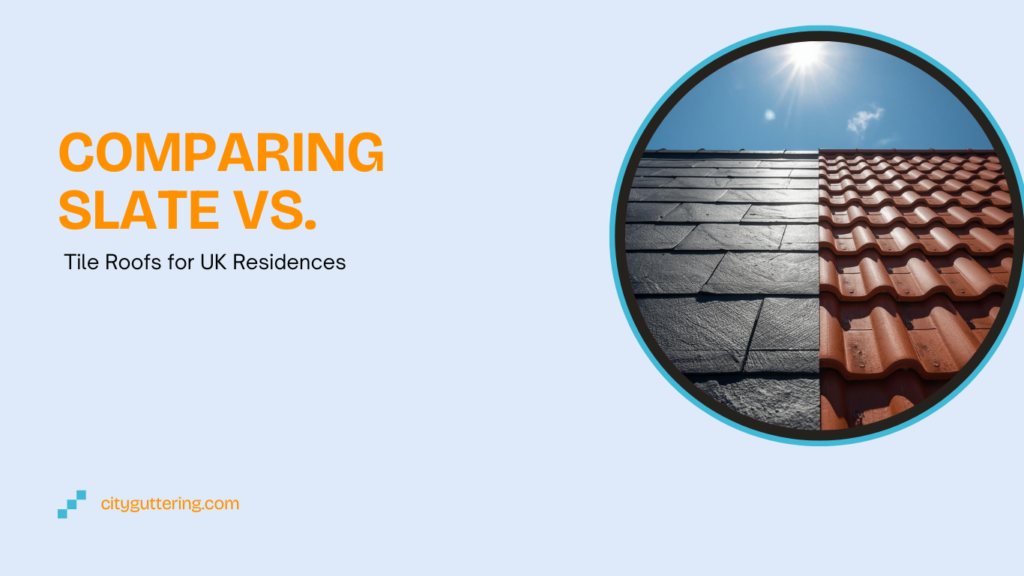
Slate vs tile roofs have been the go-to premium roofing options across the UK for generations. Both materials offer excellent protection and kerb appeal, but they come with different price tags, maintenance needs, and lifespans. This guide breaks down everything you need to know to make an informed choice for your London or Surrey home.
Understanding Slate Roofing
Slate is a natural stone material that’s been used on British roofs for centuries. You’ll spot it on period properties across the country, from Victorian terraces to Georgian manor houses. Welsh slate is considered the gold standard, though Spanish slate has become increasingly popular as a more affordable alternative.
The material forms through years of geological pressure, creating dense layers that naturally repel water. This makes it perfect for our rainy climate.
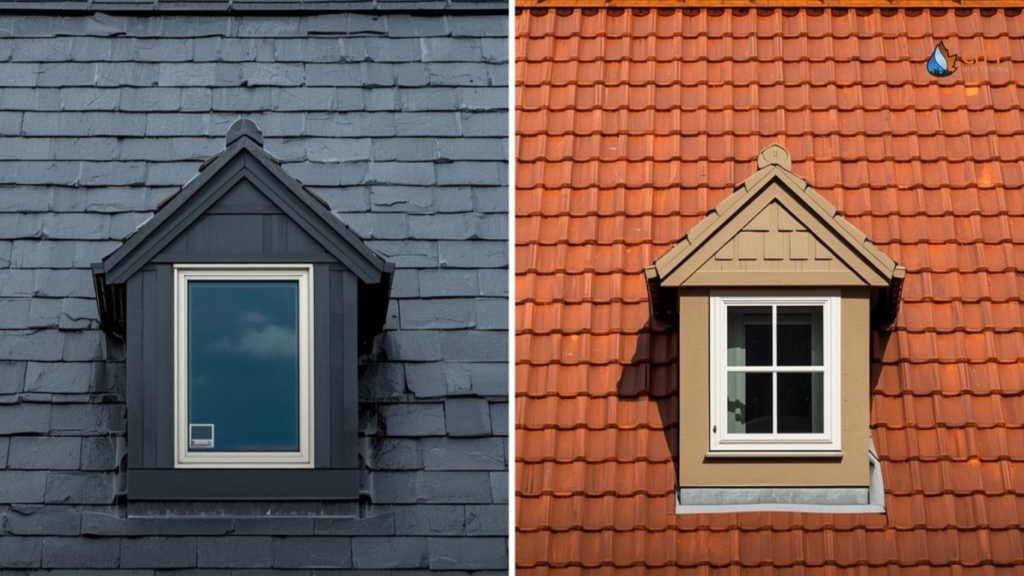
Key benefits of slate roofs include:
- Exceptional lifespan of 75 to 200 years when properly maintained
- Natural water resistance that handles heavy British rainfall
- Fire-resistant properties for added safety
- Classic appearance that suits traditional architecture
- Minimal maintenance compared to other materials
- Excellent performance in freeze-thaw conditions
However, slate isn’t perfect for every situation. The material is significantly heavier than tiles, which means your roof structure needs adequate support. Installation requires specialist skills, and you can’t just hire any roofer. The upfront cost is also considerably higher, typically ranging from £80 to £150 per square metre.
Understanding Tile Roofing
Roof tiles come in two main varieties: clay and concrete. Clay tiles have been used in the UK since Roman times and offer a warm, traditional look. Concrete tiles became popular in the 20th century as a more affordable option that still delivers good performance.
Manufacturing processes have improved dramatically over recent decades. Modern tiles are far more durable and consistent than older versions, with better colour retention and weather resistance.
Why UK homeowners choose tile roofs:
- Good lifespan of 50 to 100 years depending on quality
- Wide range of colours and profiles to match any style
- Better thermal insulation than many alternatives
- More affordable at £45 to £90 per square metre
- Individual tiles can be replaced easily if damaged
- Lighter weight than slate in most cases
The main drawbacks centre around maintenance. Tiles are more prone to moss and algae growth, particularly in damp areas of London and Surrey. They may need cleaning every few years to maintain their appearance and performance. Quality varies significantly between manufacturers, so choosing a reputable brand matters.
Quick Comparison: Slate vs Tile Roofs
| Feature | Slate Roofing | Tile Roofing |
| Lifespan | 75-200 years | 50-100 years |
| Cost per m² | £80-£150 | £45-£90 |
| Weight | Very heavy (requires strong support) | Heavy to moderate |
| Maintenance | Low (every 3-5 years) | Moderate (every 2-4 years) |
| Appearance | Classic, premium look | Variety of styles available |
| Installation | Specialist required | Standard roofer acceptable |
| Repair Cost | Higher (specialist labour) | Lower (easier to replace) |
| Weather Resistance | Excellent in all UK conditions | Very good, prone to moss |
| Fire Resistance | Excellent | Good to excellent |
| Best For | Period properties, long-term investment | Modern homes, budget-conscious |
Cost Analysis for UK Homes
Initial installation is where you’ll see the biggest price difference. Slate roofing typically costs almost double what you’d pay for quality tiles. For an average London semi-detached house, that could mean £8,000 to £15,000 for slate versus £4,500 to £9,000 for tiles.
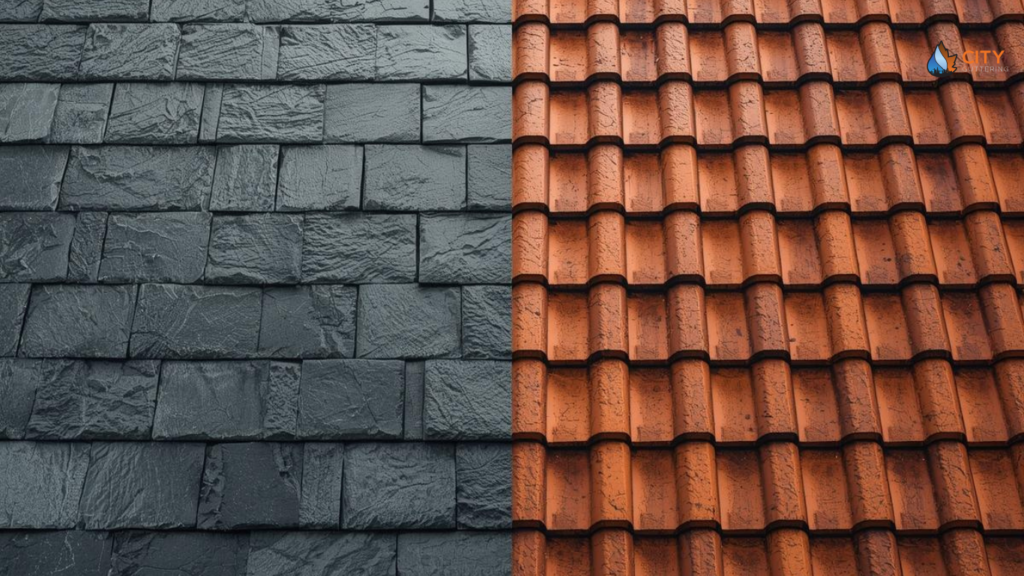
However, slate’s superior lifespan changes the calculation. Spread over 100 years, slate often works out more cost-effective than tiles that might need replacing after 60 years. You also need to factor in maintenance costs. Tiles generally require more frequent professional attention, especially cleaning and moss treatment.
City Guttering London often sees how roof choice affects gutter maintenance too. Slate’s smooth surface allows water to run off cleanly, while textured tiles can shed more debris into gutters over time.
Maintenance and Longevity
Both materials need regular inspections, particularly after severe weather. The UK’s combination of rain, wind, and occasional snow can take its toll on any roof.
Slate maintenance requirements:
- Annual visual inspection from ground level
- Professional check every 3 to 5 years
- Immediate attention to any cracked or slipped slates
- Gutter cleaning to prevent water backup
Tile maintenance requirements:
- Moss and algae treatment every 2 to 4 years
- More frequent gutter cleaning due to debris
- Replace broken tiles promptly to prevent leaks
- Check pointing and ridge tiles regularly
Your gutters work harder with certain roof types. Proper gutter maintenance from specialists like City Guttering London ensures water drains correctly, regardless of whether you choose slate or tile.
Performance in UK Weather
Both materials handle British weather well, but with different strengths. Slate excels in freeze-thaw cycles that affect many UK regions during winter. Its dense composition prevents water absorption that could crack the material when temperatures drop.
Tiles perform admirably in heavy rain and moderate wind. Modern tiles include interlocking features that resist wind uplift better than older designs. They also provide good ventilation under the tiles, reducing condensation problems common in the UK climate.
For London and Surrey specifically, both materials work well. The relatively mild winters mean extreme cold isn’t usually a concern. Heavy rainfall and occasional high winds are the main challenges, which both slate and tile handle effectively.
Which Suits Your Property?
Your choice depends on several factors beyond just budget. Period properties in conservation areas often require slate to maintain character and comply with planning rules. Modern homes have more flexibility and can suit either material.
Consider your roof structure too. Older properties might need reinforcement to support slate’s weight, adding to costs. If your property already has slate, replacing like-for-like is often simpler than switching materials.
Think about your long-term plans as well. If you’re planning to stay in your home for decades, slate’s longevity makes financial sense. For shorter-term ownership, tiles offer excellent value without the premium price tag.
Conclusion
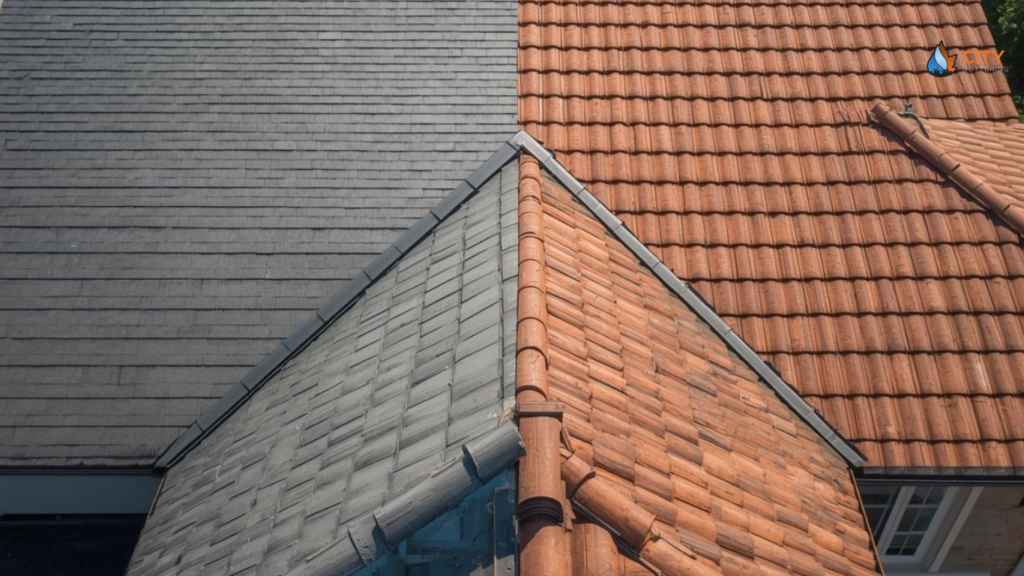
Both slate and tile roofs offer proven performance for UK homes. Slate delivers unmatched longevity and prestige but requires significant upfront investment. Tiles provide excellent value with good durability and more style options.
Your choice should match your property’s character, your budget, and how long you plan to stay in your home. Whichever you choose, remember that your roof’s performance depends partly on proper gutter maintenance. City Guttering London offers free inspections across London and Surrey to ensure your gutters work properly with your roofing material.
Contact us for a free quote within 45 minutes and keep your entire roofing system in perfect condition.